
“Lock your chair.”
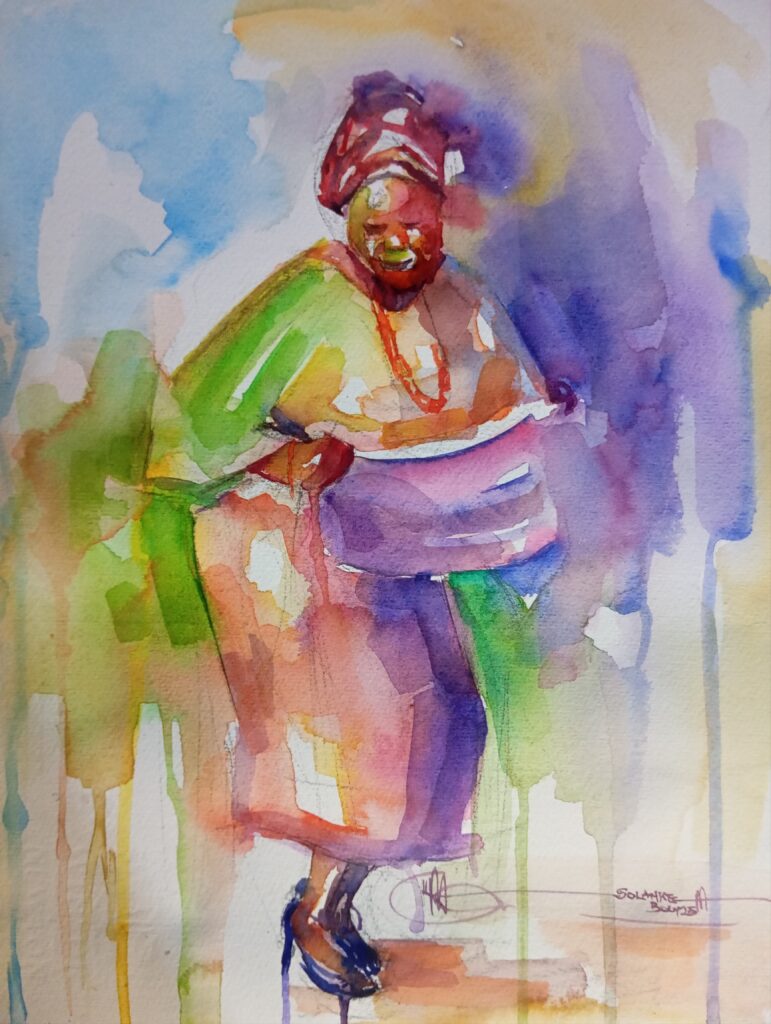
Tugging the edge of a bouffant mahogany wig with one hand while with the other fondling the folds of an emerald green jersey she’d paired with canary-yellow slacks, Sadie Mayfield replied, “Honestly, I lack the mo-ti-vay-shun.”
“But we talked about this. Your goal was to walk down these stairs on a Sunday morning, get in the car, and be back in church.”
“Oh yes, dear, I do, I do need to be in the lair of the Lord, but phys-ically I cannot.”
“Oh, but you can,” I, her physical therapist, said. “You know you can.”
“Not with this arti-fi-cial extremity.”
“Is you is or is you ain’t interested in returning to church?” I said, adopting the Alabama-backwoods dialect she would unearth only to amuse me. All other times, her diction had been annexed from Columbia University while acquiring her edu-cay-shun.
“Ain’t, Mr. Eastman?” she said.
“I know it’s non-standard English, Miss Mayfield.”
“And we’ll have none of that around here-uh.”
“No Ma’am. Now let’s get back to work.”
She was never, God forbid, a bore, with her highly affected schoolmarm poise, precise diction, raucous laughter and wildly dramatic gestures punctuating vivid and captivating anecdotes of life before the bloodletting, as she put it.
Miss Mayfield had seduced me from the start.
In her presence, against good manners, inclination and training, I called her Miss, not Mrs. or Ms.
If I slipped, she would sigh stridently and say curtly, “Miss Mayfield.”
As for Mr. Mayfield, though she intimated there was one, she never said a word.
Diabetes had swindled Miss Mayfield’s health.
“The word,” she informed me in one of her early lectures, “comes from the Greek verb diabainem, to stride, or stand with one’s legs asunder, straddling while, if you will, discharging.”
“Urine?” I inquired.
“Yes, sugarfied urine.”
“Making one a urinary siphon.”
“Exactement,” she said, in the language we shared, “a disease named for one of its most distressing symptoms, an aqueous emergency.”
She ensured that all who passed her portal understood that a saccharine emergency led to shock, coma or death, and that in the event of such a calamity, one was not to hesitate in the administration of her een-suh-leen. Because of her increased susceptibility to infections and colds, visitors received militant and meticulous allocutions on hand washing and germ nullification.
The disease had robbed her, not only of her vision, but the circulation and sensation in her lower extremities. A toe blister, unseen and unfelt, ulcerated, infected and rotted. She refused amputation, opting instead for surgical debridement, the removal of the contaminated, lifeless flesh, exposing underlying fresh and vital tissue. When that failed, she acceded to an amputation of the toe which, the surgeon warned, would most likely fail and when it did, faced with the prospect of losing her leg, Ms. Mayfield allowed, much to the surgeon’s chagrin and impatience, only incremental cuts, beginning with the remainder of her toes, then the forefoot, followed by the ankle, and then the shin, only achieving viability of the leg’s circulation just below the knee, each subtraction a betrayal of her sanguineous fluids, a brutal act for which she was never prepared and from which she never completely recovered.
The occasion on the stairs was, when she faltered in her determination to get back to church, the culmination of six months of grueling exercise, rolling in bed to prevent the sores of prolonged postures, bridging her pelvis to allow the placement of a bedpan, balancing at the bed’s edge while lodging a smooth wooden board beneath her buttocks, bearing and buttressing her weight on her hands as she shifted it by inches to the seats of the commode, or the wheelchair or the tub bench where she was finally able to wash “north, south, east and west of possible,” as she referenced her private parts.
Ultimately, she gained sufficient strength to stand on the remaining extremity while gripping the kitchen counter, building stamina while the diminished leg dangled in isolation, useless until the flap of calf skin covering the stump formed a surface durable enough to withstand her body weight in the socket of an artificial limb.
When the prosthesis arrived, she referred to it as the thing-a-ma-jig or the thing-a-ma-bob or the thing-in-itself. For weeks, like scientists in search of a cure, we positioned and repositioned woolen socks in unwrinkled layers over the delicate, compromised skin of the stump, and buckled and re-buckled the straps of the prosthesis to acquire the correct alignment of flesh and bone enabling her to stand, bend and squat in the performance of her toilette, then mastering walking on the plush, purple shag rug of her bedroom, the fractured tiles in the bathroom across the hall, the cracked linoleum of the kitchen, and the buckling wooden floors between the islands of Oriental rugs in the dining room, living room and foyer with their risky borders of fringe.
Beginning first with a walker, then graduating to a four-pronged cane and eventually, to a single point cane, she learned the geography of her home by, because of her declining vision, counting aloud the paces to each piece of furniture, appliance and appurtenance such as standing ash trays, tea caddies, hat stools, purse ottomans, potted plants and the sculptures that comprised her design esthetic, all the while incorporating doorways and turns.
“Figh-iv, to the commode-uh.”
“Twenty, to the toilet.”
“Sixty, to the breakfast nook, making a right at twenty-nigh-in.”
As a retired English teacher, with more than forty years in the classroom, Miss Mayfield, when she learned I fancied myself a writer, would, in the midst of an activity in which inevitably I bore the brunt of her weight, tangle over the odd rule of grammar, the correct placement of the adverbial clause, the simplicity of the simile, or the magic of a metaphor. When resting from a bout of strenuosity, she might expound on the difference that prevailed between elocution, the art of public speaking, and diction, one’s choice of words. But with time, these bursts of repartee became a ploy to evade the nature of my visits.
“Tarradiddle,” she said one day, when confronted on another thinly-veiled, labor-avoiding conversational tangent.
“Tarradiddle?” I repeated.
“A petty falsehood. Origin unknown,” she answered.
In addition to these work stoppages, Miss Mayfield had a retinue of visitors that could bring the rehabilitation clock to a standstill. A delivery of medical supplies, which she insisted be inspected, compared to the invoice and put away immediately.
Payment to the young gentleman who delivered the paper.
Instructions to the gardener on the planting beds.
Getting rid of realtors wondering if she might relinquish the property in this seller-friendly market.
The religious converters with whom she exchanged literature.
Mr. Babbs, the neighbor across the street who had agreed to manage her financial affairs. The ladies from church bearing casseroles mummified in plastic-wrap, bedecked with repurposed ribbons to which a note of blessing had been attached, which she insisted be read to her before she discharged the dish to the freezer.
When the doorbell pealed, her spine would straighten and she would call for her wig-uh, for which we, her caretakers and I, dutifully searched until found on the coat rack by the front door buried under hats, shawls and stoles; harpooned on the handle of the wheelchair, or strangled beneath the seat cushion; nestled like a sleeping animal above the toilet; balled and buried in a wastebasket; hitched to the bedpost; or, after a social call, ambushed in bedclothes.
Amidst a potpourri of medical supplies atop her dresser she maintained a stable of seven featureless, white foam heads, each assigned a wig of the same color and pageboy style but of graduated lengths. She explained that “back in the day” she had worn each of the wigs for two weeks, cycling to the end of the line then repairing to the beauty shop with a carload of hatboxes, emerging with, to the unsuspecting, a haircut. Long since devoid of professional attention, swollen with neglect, sprinkled with dust and dried food product, the wigs, now scattered throughout the household, when retrieved to receive company, were hastily applied, the bangs often headed in the wrong direction giving Miss Mayfield the appearance of having recently and ferociously tussled with a pack of teenage girls.
Thus bewigged, she greeted her guests, dispensed with the business at hand, inquired after the weather, the traffic, the state of the nation and the visitor’s health, which prompted an inquiry after hers, the response a litany of ailments, treatments and ongoing, brief-but-catastrophic brushes with death.
When I declared the visits disruptive, stipulating that the visitors should call at an hour that did not jeopardize therapy, she argued that the callers and the casseroles and the com-pash-shun buoyed her in this hour of need-uh. “And how,” she continued, “could one expect busy people to alter their schedules for me? I’m home all day, after all.”
She wearied my patience, not allowing me in before ten because it was uncivilized, or from one to two because she watched One Life to Live, or from three to four-thirty because she napped, and when I recited the list of appointments on my schedule, all, as I told her, with non-argumentative people who respected my time and graciously, if necessary, turned visitors away, she pretended not to hear.
“How could you,” she said, “deny me a source of moral fortitude?”
It seemed I could not deny her much.
“There will be a next time, Mr. Eastman,” she said at the end of another sabotaged session, “will you grant me that?”
“Yes, Miss Mayfield, there will be a next time, but don’t think you have carte blanche. There is a limit.”
“And have we reached it?”
“No, but each time we forgo therapy, we lose muscle momentum. Your strength slides backwards.”
“Ah, but the Lord will see to it that I do not. And if he won’t, I’m sure you will.” “But what will I document in my notes?”
“That I sat up for an hour.”
“But you can do that anyway.”
“Well, say I did it again, and at great expense to my health.”
“What if the authorities deem it unnecessary and refuse to pay?”
She raised a finger to her lips to silence me. “Well then, if that happens, send the bill to me. And besides, are you above a canard?”
“A lie?”
“A white one.”
“Oh Miss Mayfield, that would be fraud.”
“Fraud? No. Just another version of the truth. State for the record the activities we intended and then report that I lingered in the loo with a digestive calamity.”
“That would be malingering.”
“Ah, very funny, Mr. Eastman. But why do you sport such inflexible ethics?”
“I’m not sure if that qualifies as a compliment,” I said. “But I’ll accept it as such.”
When she was at her most exasperating I threatened to draw up a written contract of appropriate patient behaviors after the verbal one had collapsed and told her that should she violate the contract I would have to fire her.
“Fire me?”
“Simple as that.”
I did not fire Miss Mayfield because, like a favored aunt for whom one’s affection attenuates annoying-yet-amusing idiosyncrasies, I could no more say no, than goodbye, especially during those moments when she stepped off her regal throne, and slipped off, like an unneeded stole, the mantle of her polished veneer and addressed me as a peer, for in the arena of disabilities, she had become the apprentice.
I did not fire her because with a hard intelligence, a noble heart and a dignity that was true to the bone, as well as much coaching on my part, she slowly but eventually applied herself to the blueprint of her rehabilitation, that had as its long-term goal her return to the religious fold.
Weekly, the Minister arrived to lay his hands upon Sister Sadie Mae. In a loud voice, he would offer comforting words to negate her lachrymosity, recite inspiring Bible passages and beseech the Author of Everlasting Life, the Giver of all Spiritual Grace to send his blessings so that she might return, upon completing this journey of arduousness, to the work of the Lord.
The Minister’s visits, of course, trumped mine and she received him in the living room where the caregivers would place her in her wheelchair between the arched windows, swagged grandly in a gold fabric once glorious, now fissured and sagging. On the wall hung life-sized oil portraits of her parents – her father in black, holding the Good Book, her mother in white, a diamond cross pinned to her lapel.The remaining walls were chock-a-block with paintings purchased on her tours of the European capitals. Eighteenth-century reproduction porcelain figurines in gender-complementary pairs cluttered Venetian table lamps, and holding court on a wan and severely blotched camel-colored carpet, two stained celadon silk couches with matching and equally stained side chairs.
During his visits, I completed paperwork in the breakfast room, a riot of red-and-white polka dots, overlooking the carport and the sleek but severely dented white Cadillac with shark-like fins she could no longer drive.
After their session, she enjoined him to propel her to the dining room where, surrounded by carved wooden cabinets bursting with her entertainment paraphernalia, she offered him a slice of store-bought box cake and a cup of tea, which he, with a nod to me, brushed aside, saying, “There are many Brothers and Sisters at home today in need of the Lord.”
When I broached the subject of these interruptions, citing, again, a demanding roster that included expectant parents of handicapped children just waking from naps, who required timely administration of pain medication before treatment, she defended the Minister’s calls.
“Unne-go-tiable, dear. We cannot stand in the way of the Lord’s work. He will put me on my feet, with your help, of course, and back in the pulpit so that I might deliver my speech of interest to the congregation.”
Miss Mayfield had kept tucked, throughout her rehabilitation, in any available pocket a small notebook in which she painstakingly scribbled phrases she planned to parlay into an essay tentatively entitled, “The Life of the Religious as Lived Through the Virtue of Good.” While some of her thoughts arrived at night during her nocturnals, many disembarked during our treatment time, and it was her reappearance in the pews that I shamelessly used to induce her to tackle the seemingly insurmountable task of climbing forty feet of terraced brick aprons with decorative, unsteady handrails descending from the front door to the street where she could meet a member of the Church and motor to Sunday services.
“But we’ve done the inside stairs,” I argued that day at the front door, confident that I could prevail against her lack of motivation which, I suspected, was a bad case of nerves for someone who, nearly blind and balancing on one leg, with a history of falls, feared the worst.
“Yes, we have done the inside stairs,” she replied, “but if memory serves me, there was not such a pummeling, buffeting wind.”
“We’re doing it for the Lord,” I tried.
“Well, Mr. Eastman, He has many items on his agenda, and besides, He ain’t always reliable.”
“Ain’t, Miss Mayfield?”
“Ain’t,” she said, definitively.
Her muscle readiness for the stairs came after months of strapping the prosthesis, which she would initially have nothing to do with, to her knee; months in which she argued that it was the wrong size, that it belonged to someone else, that for her skin tone, the color was wide of the mark, that the prosthesis poked, pinched or pierced her exquisitely sensitive epidermis, making locomotion impossible; months before she would admit that the problem with the prosthesis was that the foot, a hybrid of wood and foam, would not fit her fancy shoes.
“But what will I do, with all that footwear?” she asked.
“Donate them to charity,” I ventured.
“Charity?” she said. “But dear, who would want to wear someone else’s pumps?”
When I relegated her feet to more appropriate athletic footgear, she deemed them puffy and unsightly, claiming that she would, upon donning them, resemble a penguin.
“But” I said, appealing to logic, “they improve your balance.”
When, in protest, she untied the laces, I retied them.
I countered all her complaints, until finally, done with cajolery, I buckled a thick canvas belt about her waist and hoisted her onto the peg leg, and up a carpeted step of the curving staircase.
“White?” she said of the belt. “At this time of year?” As though medical supplies, like the accessories spilling from her dresser drawers, could be obtained in fashionable colors.
Clutching the handrail, she tapped the tip of her cane along the edge of the step searching for the foothold; then, shifting her weight onto the intact leg, she hauled herself up with an unladylike grunt, her opposite hip orchestrating the prosthetic’s slow arc of arrival. Short of breath, she rested, smiled at her accomplishment, and recollected her days on the dusty acres of Alabama land on which she was raised, where dancing, something she excelled at, was forbidden by her father, the Reverend Hunter, and which, when he departed the domicile, the Hunter girls engaged in, lining up by seniority to take turns with their sole partner, their brother, as from the Victrola arose the voluptuous beats of the two-steps, fox trots and tangos she adored.
“But it was the Charleston that flipped my switch,” she said. “I could cut a rug.”
“Could you reach a dancer’s six o-clock?” I asked.
“Maybe ten-till.”
Each stair elicited another story as we passed the cavalcade of portraits capturing the Hunter girls in middle age, clad in, as befitting Mothers of the Church, white tailored suits with rhinestone buttons, plumed wide-brimmed white hats, white handbags, sensible, low-heeled white shoes, and same-colored gloves buttoned at the wrist, each of them a professional who, in exchange for permission by the Reverend to obtain an education, promised, upon the completion of it, to finance the tuition of the ensuing sibling.
When Miss Mayfield, the youngest, accepted at her father’s behest a teaching assignment in Africa, she mailed paychecks home to the next eldest sister for safekeeping. Upon her return, no savings awaited. Figuring that Sadie, as the youngest, had no education to finance, her sister had disposed of the money.
“Where did it go?” I asked.
“On a Cadillac, four fur coats, five strands of pearls and a couple of diamond sets.”
Weeks passed before she reached the top and we were able to tour the maze of rooms, once grandly appointed, but now showing their age. From packing boxes spilled the belongings of the Lost Women of the Church to whom Miss Mayfield, in exchange for attendant services, provided a living situation, an arrangement engineered by the social worker when Miss Mayfield had lost the ability to care for herself, and refused to be placed in an extended care facility, saying of the ultimatum, “She threatened to put me in jay-ell.”
While once she commanded sleeping quarters that included a sitting room with a fireplace and an attached, private terrace, her disability had demanded that she move to the bantam bedroom off the kitchen, intended for the maid, and now congested with hospital equipment, an entourage of bureaus and bedside tables, a clutter of medications, medical supplies, jewelry boxes, a floor-standing radio, a black–and-white television set with rabbit ears, her record player, stacks of records—mostly jazz—and piles of neatly folded, color-faded clothing populating the windowsills and the lavender settee angled into the corner, across from the bed where she received her intimate guests. A path, wide enough for the wheelchair, snaked from the bed to the door with tributaries to the commode and a closet busting with the custom-tailored clothing of her past.
As her disease progressed, she had been reduced to leisurewear such as jerseys and slacks, or when clothing became an impediment to personal tasks, housecoats; but she never brooked the loss of her wardrobe. While working in the bedroom, with a hand to her forehead, feigning exhaustion, she would suggest that she might rest a spell, then command me to cull a garment from the collection. A floor-length, hooded sable coat with a diamond clasp. A nubby pink silk suit with dyed-to-match pumps. A mustard paisley pillbox hat. A purple leather overnight case. All vestiges of a former fashionable life that for safekeeping, what with strangers inhabiting her house, she had had moved to the downstairs bedroom. I often found her there, when I arrived, seated in her wheelchair, rolled as far into the closet as the threshold allowed, fingering the tulle of a cocktail dress, the furls of a velvet gown or stroking the pelts of furs, and I imagined her as hostess to the parties she threw in the basement ballroom, with its panels of dusky wood, crystal chandeliers and bow-shaped bar, crowded with well-dressed guests, the conversation swollen with whiskey, the air thick with smoke and the swirling streams of posh perfume.
Miss Mayfield had entertained.
But mostly it was ladies in hats, sisters of the Church, or her sorority, with handbags and gloves neatly abandoned on the library table, lunching on tea sandwiches at linen-draped tables, sipping iced tea, planning the forthcoming charitable event.
Once a year she had invited students from her classroom who had demonstrated exemplary scholarly scholastics, specifically those who had achieved A’s, to her home for lunch. They waited in line at the punch bowl while Miss Mayfield ladled a courtly arc of the beverage into crystal cups with matching saucers, upon which a white doily had been placed, and passed them into the students’ nervous hands. She then gestured towards the silver platter of plump pink frankfurters nestled in doughy tan buns, a salver of condiments, ample bowls of potato chips, the tray of brownies, and goblets bursting with cubes of red gelatin.
“Jell-O?” I asked.
“One must always, Mr. Eastman, comfort the palates of one’s guests, regardless of how limited they are,” she countered.
Afterwards, she allowed them to dance.
Mustering the motivation, finally, that day on the front stairs, she reached the bottom, rested, sang a song of praise, spun around on her good leg, returned up and sang the song of praise again. A year had elapsed since she had not left home like the Queen of Sheba aloft in a chair. Having met our final goal I enlisted, via the Minister, hefty members of the Church to transport Miss Mayfield to her destination, and by our last visit, she had delivered the speech on which she had labored throughout her rehabilitation.
“You were featured,” she said, beaming. “Mightily.”
Apparently, the speech roused the congregation, shouting affirmations, to their feet. After, at the reception she stood and greeted a long line of well-wishers, and as she described the day, I heard in her voice, for the first time since we had met, hope.
My job was done.
When hugging her goodbye in the living room on the last visit I noticed that two new photographs had been placed on the mantel above the fireplace. The first, taken when Ms. Mayfield stood on the prosthesis for the first time, long enough for the image to be taken, she wears the loathsome athletic shoes, a pink-and-lime paisley shift, no wig, a grimace etched across her face, her body immobilized by the disease, looking isolated, her lifestyle eroded, her legacy erased, inundated by despair, afloat on what she called her obsidian sea.
“But we’re in this lifeboat together, Ms. Mayfield,” I had often said.
“Ah, but I am about to go overboard, Mr. Eastman, and I can’t swim.”
The second photograph, taken the Sunday she returned to Church, shows her standing next to the Minister whose hand rests gently on her shoulder. She is regal in a white suit, gloves, white hat perched atop a freshly coiffed wig, handbag dangling from a crooked elbow, on her feet a pair of fancy white shoes with a low heel, adapted by her shoemaker with lacings along the back seam to fit the artificial foot. She does not face the camera but rather, turns an upward gaze with a broad, grateful smile at the man who patiently brought her a bit of God when she could not bring herself to Him.
I spot the feet of the four-pronged cane behind her.
The juxtaposition of the photographs tells the story of how her once fractured heart was made slightly, bearably whole again.
“Goodbye, Mr. Eastman,” she said as I prepared to descend the stairs. “You will always be in my prayers.”
And she in mine because in her annoyingly charming way she had crossed the demarcation zone of professional distance, that metaphorical space in which I, as the therapist, am required to be present, to support the emotional components of diseases and injuries, and the suffering that comes with such devastating physical ailments, to validate anxiety without adding to fear, to bear witness without surrendering to the horror.
She had crept into my heart. Now the separation was acute.
She remained in my prayers because five percent of diabetic amputees will fall and fracture bones, rendering them wheelchair-bound. Half lose the other limb within five years. Less than forty percent survive five years.
I did not know her fate until sixteen months later, when the doyenne of Paloma Drive became my client again, after what she called her coup de grace. Constant gripping of wheelchair rims and walker handles had inflamed the tendons of her wrists, contracting them to unfeeling claws, and had required surgical release. For months her wrists and fingers would remain splinted, disabling her in ways she had not imagined, like not being able to insert a tube into her bladder to drain the transudate, or for that matter, wash possible. In addition, the white coats had discovered another ulcer on the remaining foot, but she vowed not to repeat the fate of its predecessor.
“They’ve severed off enough of me,” she said.
“What about the gangrene?” I asked.
“Gangrene’s going with me.”
The Men of the Church, honoring their commitment, had fetched Miss Mayfield to her pew on Sunday mornings, but when she could no longer climb stairs, when bearing her in a wheelchair became a burden on their backs, her attendance lapsed.
Meanwhile, Mr. Babbs had bilked much of her financial worth.
A cunning attendant had stolen a box of checks and shopped on her digh-yim. To generate income, she had been forced to rent the ballroom to people with deplorable hygiene, whose cat shat on her blankets and whose cigarette smoke, wafting through the heating grates, saturated her sheets.
She operated now in an imperfect orbit of bed to chair.
To ease the effort of the caretakers, I ordered a mechanical lift with a canvas sling suspended from chains that had a hole for her bared buttocks, which, if the alignment worked, would marry them to the perimeter of the commode’s bucket, or the seat of her circumduction chariot, as she had come to call the wheelchair. Because the attendants perceived lifting her in the lift as a perilous act, we had to practice repeatedly, hoisting Miss Mayfield aloft while she waxed, eloquently and extensively on presidential politics, the price of crude oil, the potential for us to witness the end of the world in our century, or the proper seasoning of soups. Training her attendants meant that I could justify more visits to the authorities, but it seemed like an endless task as the attendants came and went, unable to provide Miss Mayfield’s increasingly demanding physical care, the upkeep of the house, and the implementation of the social tasks she insisted upon, such as trotting out for callers silver-handled, linen-draped trays laden with tea pots, china cups, plates of baked goods, lemon wedges wrapped in cheesecloth, carafes of cream, sugar bowls, bud vases and neatly folded frayed napkins.
Ms. Mayfield reasoned that since she provided a home to these morally wayward women, she could expect unquestioned servitude. She kept them busy, shouting instructions from every room of the house, but none lasted for long.
Towards the end of my tenure there would be a remarkably overweight woman who unveiled that she was pregnant, and Miss Mayfield feared the physical demands would engender a miscarriage but before she was fired, it was discovered that there were hams missing from the freezer and that the boyfriend had been surreptitiously living in the basement. When a neighbor came to the front door and confronted one of Miss Mayfield’s visitors about the “riff-raff” within the household, derogatory and racist words flew across the lintel, and according to Miss Mayfield the “po-leece” were summoned.
Then, her already compromised physiological systems began to go awry.
“Haywire,” she said.
Yet she hosted two more social events: a dinner party for eighteen, to which she invited the Church custodian to speak on the subject of alcohol abuse and when he did not arrive she apologized and prevailed upon Mrs. Blankenship to read her inspirational poetry and Mrs. Shields, to discuss, from a Black American perspective, her recent travels to the African continent. For the final occasion, Miss Mayfield enclosed a tea bag with each written invitation to the Ladies-of-the-Church, encouraging them to make a cup of tea, then reflect on the contribution they might make to the Church Fund. Without having left home, Miss Sadie Mae Mayfield raised a thousand dollars.
While the disease extracted more of her attention, she did not lose her sense of humor, and though her motor skills lessened, they did not disappear. When one of her renters nervously delivered an overdue check, it slipped from his grasp and floated to the floor. Before I could bend to assist, with an alacrity that startled me, Miss Mayfield folded at the waist and scooped up the check like a seasoned second baseman.
“That was risky,” I said.
“But dear,” she said, “I am not day-ud.”
“Tell me, again, Mr. Eastman, why you have to leave,” she asked, on my last visit. “I can’t justify more visits,” I said.
“To the authorities?”
“Yes, to the insurer. Functionally, you’ve plateaued.”
“To plateau?”
“From the French, Old French, platel, platter, from plat, flat. I believe, Madame, you’ve literally flattened out.”
“Ah, Mr. Eastman,” she said, shaking my hand, “you’ll make any dinner party a success. Tallyho!” she called from the threshold, her parked wheelchair dangerously unlocked, bussing the air, waving with majestic sweeps of her splinted wrists as I descended the stairs, clambered into the car, engaged the gears, rolled down the windows, signaled left and leaned into the afternoon traffic, her voice vanishing in installments, like the last light of a perfect summer’s day.
With amputation, nerve endings balled at the end of the sacrificed extremity reverberate with orphaned sensations. The absent flesh like a hovering ghost, a memory of connection. So it was for me in the weeks that followed her discharge.
I missed her, missed the rhythm of our visits, the anecdotes, the humor, the insight into the shrinking world of a once grand woman, and periodically, I found myself circling back to Paloma Drive, pausing in front of the stippled-stucco faux castle, with its peeling turrets and crenellations, and once-gracious gardens gone to seed, and wondered of her fate, but never rang the bell, reluctant to interrupt my route lest I be tardy for the next client, ashamed of the time that had lapsed, or fearful of what I might find.
Her fate eluded me for seven years, until, out of a compelling curiosity, I found her in an online database.
Sadie Mae Mayfield.
Date of birth.
Mother’s maiden name.
The social security number issued in the state of Tennessee.
The date of her death.
A week after her seventy-ninth birthday, and three months after we had bid adieu. I immediately envisioned the house robbed of its grand possessions, not the least of which was her indomitable, tender spirit, and I dreaded that she might have died there, as was her greatest trepidation, alone, in the dark, with no hand to hold but her own.
I mustered the phrase that she, eyes closed, a supplicating hand to her forehead, recited whenever a friend had passed.
“Glory, get thee to Jesus.”
E. Eastman, a retired Physical Therapist, graduated with an MFA in writing from the University of San Francisco in 2004. His award-winning essays have appeared in Fourth Genre, Bellingham Review, Switchback, InDance, and Noe Valley Voice. He has taught creative writing to both children and seniors in San Francisco. He vows to spend to spend the rest of his life on the road satisfying a curiosity for culture, high-end hotel rooms, exotic comestibles, being the perfect dinner party guest, and regretting that he never, after living in Spain for six years, became a matador or a professional flamenco dancer.
Artwork, “Lost in the Beats,” by Solanke Boluwatife Emmanuel